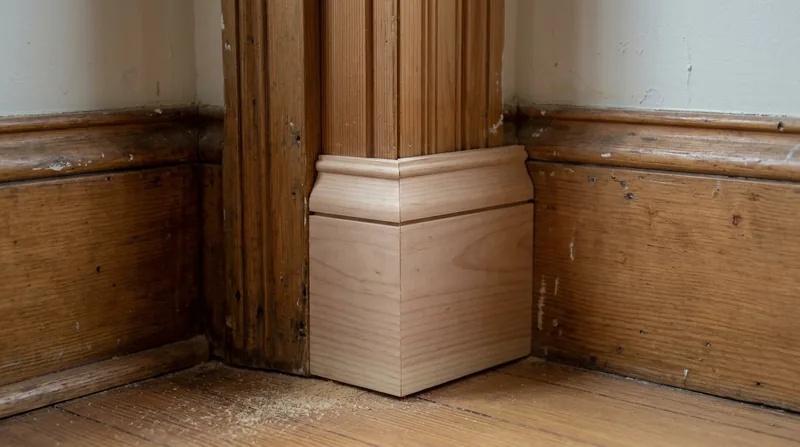




Finish & Trim Carpentry in Salem is the difference between a house that feels complete and one that feels half-done. From the Victorian parlors of the Court-Chemeketa historic district to the open-plan layouts of West Salem subdivisions, Salem homes demand trim work that fits tight, sits straight, and lasts through eight months of Pacific Northwest drizzle every year. Tight miters, scribed joints, consistent reveals, and casing that doesn't cup or split as the wood moves with seasonal humidity, that's the work that separates a real finish carpenter from a handyman with a miter saw. We handle casing, crown molding, wainscoting, custom paneling, and built-in shelving across Salem's neighborhoods, from 1880s Italianate homes climbing Gaiety Hill to 1960s ranches in Englewood and Lansing. The wood species, moisture environment, and age of the house all shape how we approach the job, and that matters.
Why Finish & Trim Carpentry Matters in Salem's Older and Newer Homes
Salem's building stock spans 140 years, and every era has its own trim language. The deep baseboards and coped crown molding of a 1910s Craftsman bungalow in Grant or Highland require a different hand than the clean, minimal casing in a 1990s West Salem home. But the underlying challenge is the same: moisture. Eight months of rain, damp crawlspaces that rarely fully dry, and seasonal wood movement mean that poorly fitted trim will gap, split, or cup within a few years. Finish carpentry done right accounts for that movement, uses wood species that hold up to the climate, and creates joints that stay tight as the seasons change.
- Cased openings and door jambs that stay square and don't rack as the house settles.
- Crown molding and baseboard with coped joints that don't open up as humidity shifts.
- Custom trim and wainscoting that's scribed to fit uneven walls rather than left with gaps.
- Interior casing and paneling that uses the right wood species and finish for Salem's wet climate.
- Built-in shelving and cabinetry that's built to last and doesn't sag or twist over time.
The payoff is a home that looks intentional and finished, not rushed or patched together.
Local example: A 1920s bungalow in Silverton with original Douglas fir trim and 3-inch baseboards needed new casing around two interior doors where an old water stain showed past moisture trouble. We matched the profile, used kiln-dried fir that won't cup, and coped the joints so they'll stay tight. That kind of detail, matching the house, accounting for the climate, building it right, is what separates finish carpentry from trim installation.
For more on how moisture and wood movement affect your home, see our guide to wood rot and dry rot repair.
How We Approach Finish & Trim Carpentry in Salem
Every finish carpentry job starts with understanding the house: its age, the wood species already in place, the moisture history, and what the homeowner wants the space to feel like. We measure twice, cut once, and fit by hand where a scribe makes sense. Crown molding over an uneven ceiling gets coped, not mitered, so it follows the line of the room rather than leaving gaps. Door casing gets shimmed behind the jamb so it's plumb and square, not just nailed tight to a crooked opening. Custom paneling gets fitted to the walls as they actually are, not as they're supposed to be. That's the difference between carpentry and rough work.
- We inspect the space, the existing trim, and the house structure to understand what material and technique will work best.
- We select wood species and finishes that hold up to Salem's moisture and match the character of the home.
- We measure, template, and fit each piece by hand, scribing where the wall or ceiling isn't straight.
- We use coped joints for crown molding so it reads as a continuous line, not a series of mitered corners.
- We sand, stain, or finish on-site so the work blends with the existing trim and the homeowner's color choice.
The result is trim that looks built-in, not added on, and that stays tight and square for decades.
Salem example: A 1950s ranch in Englewood needed new interior casing and baseboard in the living and dining room after a plumbing leak damaged the old trim. The existing trim was 2.25-inch baseboard with simple casing. We matched the profile and species, made sure the new work was plumb and level, and finished it to match the rest of the house. The homeowner didn't need to replace the whole room, just the damaged pieces, that's repair thinking, not replacement thinking.
If you're planning a larger remodel or adding custom built-ins, see our work on custom built-ins and shelving.
Finish & Trim Carpentry Methods and Techniques
| Approach | Description | Best for |
|---|---|---|
| Coped Crown Molding | The profile of one piece is cut to fit the profile of the adjacent piece, following the contour of the wall and ceiling. | Rooms where the ceiling or walls are not perfectly square, and where a continuous, seamless look is the goal. |
| Scribed Trim and Casing | The edge of the trim is shaped to fit the contour of an uneven wall, door frame, or opening, so no gap is left between the trim and the surface. | Historic homes with settled walls, uneven openings, or existing trim that doesn't line up square. |
| Wainscoting and Paneling | Vertical boards or panels installed from the floor to a dado rail or chair rail, typically 32 to 48 inches high, with a finish coat above. | Dining rooms, bathrooms, and hallways in older homes, or modern spaces where a traditional look is desired. |
| Miter and Reveal Casing | Trim around doors and windows with precise mitered corners and consistent setback (reveal) from the edge of the jamb, creating a clean, symmetrical frame. | Interior doors, windows, and openings where a modern or transitional look is preferred. |
| Custom Built-in Shelving | Shelves, cabinet boxes, and backing built and installed to fit a specific wall, alcove, or opening, finished to match the room's trim and style. | Alcoves, under-window benches, office nooks, and living room storage that's tailored to the space. |
Each technique is chosen based on the house, the room, and what the work is meant to accomplish. The goal is always trim that looks like it belongs, not trim that calls attention to itself.
Finish & Trim Carpentry Cost in Salem: What to Expect
Finish carpentry pricing depends on the scope, the wood species, the complexity of the fit, and whether the work is new installation, repair, or a combination. A straightforward casing job on a couple of interior doors might start at $550 to $800, while full-room crown molding, baseboard, and casing in a 400-square-foot space could run $1,500 to $2,500 or more. Custom built-in shelving, wainscoting, or paneling will be higher because of the labor involved in fitting and finishing. The best way to know what your project will cost is to get a free estimate from a carpenter who can see the space, understand the existing trim, and talk through what you're trying to achieve.
Several factors move the cost up or down:
- The number of linear feet of trim, the height of the ceilings, and whether the work is on one wall or the whole room.
- The wood species: Douglas fir and pine are less expensive than cherry, walnut, or mahogany, and each has different working properties.
- The complexity of the fit: simple reveal casing costs less than scribing to uneven walls or coping crown molding in a room with three different ceiling heights.
- Finish work on-site: staining, sealing, or painting adds time and material cost, but it ensures a seamless blend with the existing trim.
- Access and existing conditions: if we're working in a finished room with furniture, flooring, and other trim already in place, the work takes longer and requires more care.
For a detailed breakdown of pricing across different scope types, see our full pricing guide.
Finish & Trim Carpentry Near Me: What Salem Homeowners Should Know When Hiring
The right carpenter makes a visible difference in how a room looks and feels. Before you hire, ask a few simple questions. First, ask to see examples of previous work, not just photos, but ideally a chance to see a finished room or two. Look for tight joints, consistent reveals, and trim that sits flush and square. Second, get a written estimate that breaks down the scope, materials, labor, and timeline. Third, check references: a good carpenter will have homeowners in Salem or nearby who can speak to the quality of the work and the professionalism of the crew. Fourth, confirm that the contractor is fully insured and can provide a certificate of insurance on request.
A few additional considerations for Salem-area work:
- If your home is in a historic district or a heritage conservation zone, check with the city or local heritage board about any design guidelines for trim or casing before you start.
- If you're part of an HOA, review any architectural guidelines about exterior trim, fascia, or soffit changes before getting estimates.
- Ask the carpenter whether the estimate includes cleanup and disposal of old trim, or if that's an add-on.
- Discuss timeline: some jobs can be done in a few days, while others (especially if finishing is involved) may take a week or more.
- If you're planning to match existing trim, bring a sample or a high-quality photo to the estimate so the carpenter can source the right material.
When you're ready to talk to a carpenter, get in touch for a free estimate. We can walk through your space, discuss what you're looking for, and give you a realistic price and timeline.
Finish & Trim Carpentry in Salem: Pricing Guide
| Service | Price | Details |
|---|---|---|
| Interior door casing and baseboard (one to two rooms) | Starting at $550 | Includes removal of old trim if needed, new casing and baseboard installation, sanding, and finish to match existing trim |
| Crown molding (full room, linear feet) | Starting at $12 to $18 per foot | Includes coped joints, fitting to uneven ceilings and walls, sanding, staining or painting, and installation |
| Custom wainscoting or paneling (linear feet) | Starting at $20 to $35 per foot | Includes material, installation, coping to uneven walls, dado rail or chair rail, and finish coat on top |
| Built-in shelving or cabinetry (per unit or linear foot) | Starting at $1,200 | Includes design consultation, material selection, custom building, installation, finishing, and hardware installation |
| Complex or large-scale remodel (whole-room trim work) | On estimate | Full-room casing, crown, baseboard, wainscoting, or custom work requires on-site assessment to provide accurate pricing |
| Free estimate and consultation | Free | Call (971) 273-5364 for same-day or next-day response, no obligation to book, written estimate provided |
Indicative pricing, the exact cost depends on square footage, finish, and site access. Free personalized estimate within 24h at (971) 273-5364.


