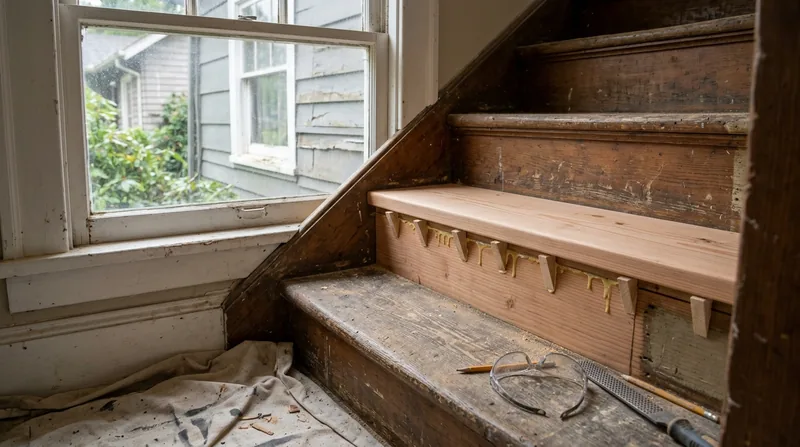




Stair & Railing Repair in Salem keeps the historic staircases in the Court-Chemeketa district and the tall Victorian homes on Gaiety Hill safe and solid, and it holds together the modern split-level climbs in South Salem's Fairmount Hill neighborhoods too. Eight months of grey drizzle and steady rain each year work against wood railings, stringers, and treads, softening them and loosening the fasteners that hold them in place. Squeaky steps, wobbling balusters, and worn handrails are not just annoying: they signal structural movement or moisture damage that gets worse every wet season. We repair and rebuild staircases on Douglas fir framing, restore period railings to their original detail, and install code-compliant handrails and attic ladders that work with your home's layout and timeline. Our carpenters handle the work from start to finish, scribing new treads to fit uneven stringers, sistering damaged joists, and turning loose railings back into solid anchors.
Why Stair & Railing Repair Matters in Salem's Older Neighborhoods
The Queen Anne and Italianate homes built in the 1880s through 1910s in Salem's historic core often feature original wood staircases with tall newel posts, delicate turned balusters, and stringers that have carried foot traffic for over a century. The steady moisture and freeze-thaw cycles of the Willamette Valley climate have softened the Douglas fir and redwood in these stringers and treads, and the constant dampness from crawlspaces below has wicked up into the wood grain. Modern Craftsman bungalows and foursquares across Grant and Highland neighborhoods face the same problem: their deep porches and stairways catch water, and their basement stairs climb out of vented crawlspaces where moisture never fully dries out. Even the 1990s and 2000s homes spreading through West Salem and Sunnyslope develop loose railings when fasteners corrode and wood shrinks with seasonal humidity swings.
- We identify soft or rotted wood in stringers and treads before they fail under load.
- We tighten or replace loose balusters, newel posts, and handrails that create a fall hazard.
- We repair or rebuild stairs that squeak, bounce, or show gaps between treads and stringers.
- We install modern handrails and attic ladders that meet current building codes while respecting period homes.
A staircase that moves or squeaks is telling you the fasteners have loosened or the wood has shifted, and addressing it now prevents a much costlier rebuild down the road.
Key info: The Salem Building Department requires permits for stairway alterations or handrail installation when they affect egress or structural support. Check with them before you start work, especially in protected historic districts like the Court-Chemeketa zone. See City of Salem Building Department for permit thresholds and application requirements.
How We Repair and Rebuild Staircases in Salem Homes
Every staircase repair starts with a hands-on look at the stringers, treads, balusters, and fasteners to understand what has shifted, softened, or loosened. We probe for wood rot in the stringers and test the fasteners holding the railing to the framing. If the damage is localized, we repair it in place. If the stringer or multiple treads have lost their structural integrity, we rebuild or sister new wood alongside the existing framing. We work through the sequence of inspection, repair planning, execution, and testing to make sure every step is solid and every railing is anchored tight.
- We inspect all treads, stringers, balusters, newel posts, and fasteners on site to map the damage.
- We probe soft spots and test for wood rot or dampness that signals deeper structural failure.
- We tighten or replace loose fasteners, shim gaps between treads and stringers, and reset handrails to code.
- We scribe and fit new treads or repair sections of stringers to match the existing staircase geometry.
- We sister new framing alongside damaged joists or stringers when repair in place is not strong enough.
- We test the finished staircase for squeaks, movement, and handrail stability before we call the job done.
This approach preserves the original character of period homes while delivering a staircase that is safe and quiet for decades to come.
Example: A 1920s Craftsman bungalow in South Salem's Highland neighborhood had a basement staircase with treads that squeaked and a handrail that wobbled. We found the stringers were still sound Douglas fir, but the fasteners had corroded and the treads had shrunk away from the stringers. We replaced the fasteners with stainless steel hardware, shimmed the treads back tight, and installed a new code-compliant handrail. The stairs are now solid and silent, and the original newel post and balusters remain in place.
For more on structural carpentry and framing work that often underlies staircase issues, see our Framing & Structural Carpentry page.
| Repair Approach | Description | Best For |
|---|---|---|
| Tighten & Shim | Replace corroded fasteners with stainless steel hardware, shim gaps between treads and stringers, and reset handrails to code. | Staircases with sound stringers and treads that have loosened or shifted due to moisture and fastener corrosion. |
| Sister or Reinforce | Install new Douglas fir framing alongside a damaged stringer or tread to restore structural capacity without removing the original wood. | Stringers or treads with localized soft spots or rot that are otherwise structurally sound in the majority of their length. |
| Replace Tread or Section | Remove and fit a new tread or section of stringer, scribing it to match the existing geometry and fastening it to the original framing. | Individual treads with deep wear, splits, or rot, or short sections of stringer that are too far gone to repair in place. |
| Railing Rebuild | Replace loose or damaged balusters, newel posts, and handrails with new wood or modern components that meet current code and match the original detail. | Historic railings that need restoration to period style or modern staircases requiring code-compliant handrails and balusters. |
| Attic Ladder Installation | Install a wooden or metal attic ladder that folds and stores neatly in the ceiling, with a frame anchored to the joists above. | Homes needing safe, code-compliant access to attic storage or mechanical spaces without a permanent staircase. |
Stair & Railing Repair Cost in Salem: What to Expect
The cost of stair and railing repair in Salem starts at around $600 for simple jobs like tightening loose fasteners, shimming treads, and resetting a handrail. Most staircase repairs that involve replacing a few treads, sistering a damaged stringer, or rebuilding a section of railing run between $1,200 and $3,500, depending on how much wood needs to be replaced and how much of the original detail you want to preserve. A full staircase rebuild or a complete railing replacement can reach $5,000 to $8,000 or more, especially if the original framing is severely rotted or if you are restoring a period home with custom balusters or newel posts.
Several factors move the cost up or down. The length of the staircase and the number of treads affected matter. The species of wood, the accessibility of the work (basement stairs are easier than attic stairs), and whether you need a permit all play a role. If the stringer is Douglas fir and still mostly sound, a repair approach costs less than a full rebuild. If the rot has spread deep into the framing or if you are working in a historic district with specific design requirements, the work takes longer and costs more.
The best way to know what your job will cost is to get two or three estimates from local carpenters who will come out and look at the staircase in person. Each estimate should spell out what work is included, what materials are used, and what the timeline looks like. See our pricing page for more detail on how we structure our estimates and what factors affect the final bill.
What to Look for When Hiring a Stair & Railing Repair Contractor Near Me in Salem
Choosing the right carpenter for your staircase repair is about more than just price. You want someone who will show up, look at the actual damage, explain what needs to be done and why, and then do the work cleanly and on time. Start by asking your contractor whether they are fully insured and whether they have done staircase work in Salem homes before. A contractor who has repaired 1920s Craftsman stairs and Victorian railings will understand the challenges of working with older wood and the details that matter in a historic home.
Get written estimates from at least two carpenters, and ask them to walk you through what they found and what they plan to do. A good estimate will name the specific repairs, the materials to be used, and the expected timeline. Ask for references from recent jobs, especially if the work involved a period home or a complex railing rebuild. If your staircase is in a historic district or if your HOA has design guidelines, make sure your contractor understands those rules before they start. Check with the Salem Building Department to confirm whether your project needs a permit, and make sure your contractor is comfortable handling the permit application and inspection process.
Call us at (971) 273-5364 or request a free estimate to have one of our carpenters come out and look at your staircase. We will give you a clear picture of what is wrong, what we recommend, and what it will cost to make it right.
Stair & Railing Repair in Salem: Pricing Guide
| Service | Price | Details |
|---|---|---|
| Tighten, shim & reset handrail | Starting at $600 | Includes fastener replacement, shimming treads, and handrail reset, typical for loose but structurally sound stairs |
| Single tread or railing section repair | Starting at $1,200 | Replace one tread or repair a short section of stringer or railing, materials and labor included for typical residential staircase |
| Full staircase or railing rebuild | Starting at $3,500 | Multiple treads, stringers, or full railing replacement, varies by wood species, length of staircase, and whether historic detail must be matched |
| Attic ladder installation | Starting at $800 | Install folding wooden or metal attic ladder with frame anchored to joists, includes trimming opening and finishing edges |
| Travel and estimate | Included and free | No mileage fee or call-out charge in Salem and surrounding areas, free estimate within 24 hours at (971) 273-5364 |
Indicative pricing, the exact cost depends on square footage, finish, and site access. Free personalized estimate within 24h at (971) 273-5364.


