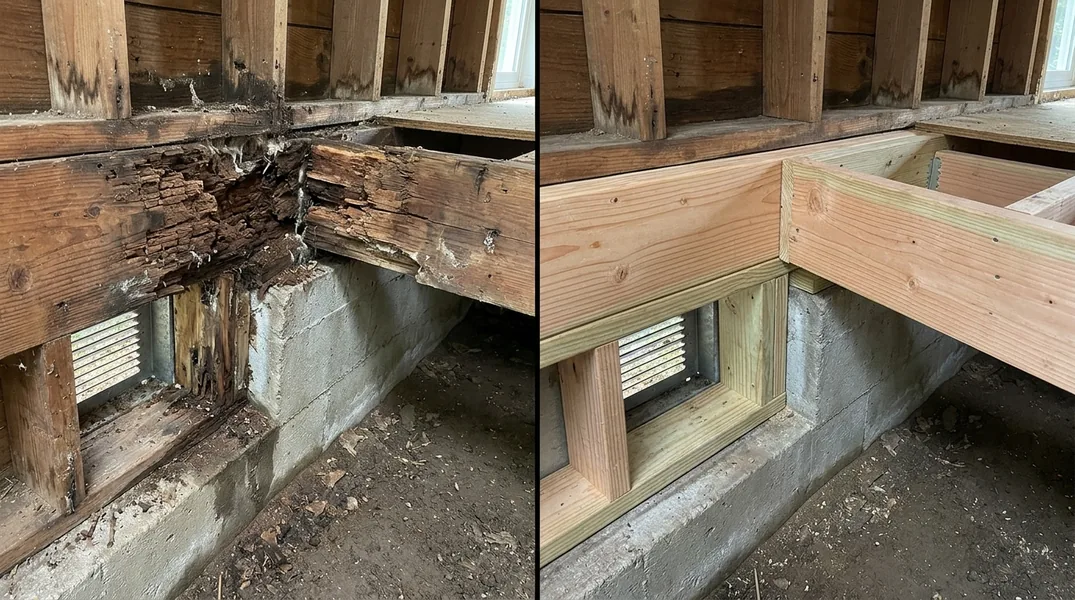
Why Wood Rot and Insect Damage Usually Aren't Covered
One of the most frustrating discoveries a homeowner can make is that their homeowners insurance policy does not cover wood rot or insect damage. This exclusion is standard across nearly all major insurance carriers, and understanding why can help you plan ahead and protect your investment in your Salem home.
Insurance companies view wood rot and insect infestations as preventable maintenance issues rather than sudden, accidental damage. From their perspective, a homeowner who regularly inspects their property, maintains proper drainage, and addresses moisture problems should never develop wood rot. Similarly, pest control is considered an ongoing responsibility of the property owner. Because these problems develop over time due to neglect or lack of maintenance, insurers classify them as exclusions. This distinction is crucial: homeowners insurance is designed to cover sudden, unexpected events, not gradual deterioration.
The logic behind this exclusion makes sense from a risk management standpoint, but it places the financial burden squarely on your shoulders. Whether it's Wood Rot & Dry Rot Repair or dealing with termite colonies, you'll need to budget for these repairs yourself or work with a specialized contractor like Salem Carpentry.
Understanding Your Homeowners Insurance Policy
Before assuming your coverage doesn't apply, it's worth reviewing your specific homeowners insurance policy document. While wood rot and termite damage are typically excluded, some policies may have limited coverage for certain scenarios. For example, if a burst pipe causes sudden water damage that leads to wood rot within a short timeframe, your water damage coverage might apply to the immediate damage, though the structural repairs would likely still fall on you.
The key is understanding the difference between covered water damage and uncovered wood rot. If a one-time flooding event damages your home's structural wood, that might be covered under your policy's water damage provision. However, if wood rot developed gradually over years due to poor ventilation, roof leaks, or foundation seepage, your insurance company will deny the claim. This is why many homeowners in Salem don't realize they're uninsured until they file a claim and receive a denial letter.
To know exactly where you stand, contact your insurance agent and ask specifically about coverage for wood rot, termite damage, carpenter ant damage, and other wood-destroying pests. Get the answer in writing if possible. This clarity will help you understand your financial responsibility and whether you need to explore additional coverage options or set aside funds for preventive maintenance and repairs.
Termite Damage Insurance: What's Typically Excluded
Termite damage is one of the most common insurance exclusions, and for good reason from the insurer's perspective. Termite infestations develop over months or years, giving homeowners ample opportunity to detect and address the problem through regular pest inspections. Because termites cause gradual structural damage rather than sudden loss, insurance companies classify this as a maintenance issue outside their coverage scope.
The National Association of Insurance Commissioners estimates that termite damage costs American homeowners more than $5 billion annually, yet the vast majority of this expense comes out of homeowners' pockets. Termite Damage Repair can range from a few thousand dollars for minor damage to tens of thousands for extensive structural compromise. Without insurance backing, Salem homeowners must either pay out of pocket or finance repairs through other means.
Some homeowners mistakenly believe that pest control insurance or home warranty plans will cover termite damage. These specialized policies may cover the cost of pest treatment, but they rarely cover the structural repairs needed after termite infestation. If you've discovered termite damage in your home, the most practical step is to get a professional assessment from a qualified contractor and understand your repair options and costs.
Carpenter Ant Damage and Your Insurance Coverage
Carpenter ants present a similar insurance situation to termites. These large ants tunnel through wood to create galleries for their nests, causing structural damage that can be substantial if left unchecked. Like termites, carpenter ant damage develops gradually, making it an excluded peril under standard homeowners insurance policies. The reasoning is identical: this is a maintenance and pest control issue, not a sudden loss.
The challenge with carpenter ants is that homeowners often don't realize they have a problem until the damage is already significant. Unlike termites, which may leave visible mud tubes, carpenter ants can work inside wood for extended periods without obvious external signs. By the time you notice sawdust or hear rustling sounds, you may be facing substantial Floor Joist & Subfloor Repair costs. This is why preventive pest inspections are so valuable for homeowners in Salem and surrounding areas.
If you discover carpenter ant damage, your insurance company will almost certainly deny any claim for structural repairs. Your best course of action is to contact a pest control professional to eliminate the colony, then hire a qualified carpenter to assess and repair the damage. Salem Carpentry can evaluate the extent of the damage and provide guidance on whether repairs are necessary or if the affected wood can be treated and preserved.
What About Sudden Water Damage Leading to Wood Rot?
There's one scenario where you might have partial insurance coverage for wood damage: sudden, accidental water intrusion. If a pipe bursts, a roof suddenly fails due to storm damage, or flashing fails unexpectedly, the initial water damage might be covered under your homeowners policy. However, the coverage typically extends only to the immediate water damage, not to any resulting wood rot that develops afterward.
Here's the important distinction: your insurance might pay for water removal and drying after a burst pipe, but if wood rot develops in the following weeks or months, that's considered a separate, uncovered loss. This is why prompt action is critical. If you experience sudden water damage, contact your insurance company immediately and document everything with photos and video. Then, hire a professional to assess whether the wood has been compromised and what preventive measures are needed to avoid future rot.
In cases of storm damage, the situation can be more complex. If high winds or falling branches damage your roof and water subsequently leaks into your home, the roof damage itself might be covered, but wood rot remediation typically isn't. Understanding these nuances helps you work effectively with your insurance adjuster and know what expenses to expect out of pocket.
Protecting Your Home: Prevention and Planning
Since insurance won't cover wood rot or insect damage, the best strategy is prevention combined with smart financial planning. Regular home maintenance is your first line of defense. This includes keeping gutters clean, ensuring proper grading around your foundation, maintaining adequate ventilation in attics and crawl spaces, and addressing any roof leaks immediately. These relatively inexpensive preventive measures can save you tens of thousands in repair costs down the road.
Beyond maintenance, consider budgeting for periodic professional inspections. A qualified home inspector or pest control professional can identify early signs of wood rot, termite activity, or carpenter ant colonies before they become major problems. Many homeowners in Salem find that an annual or biennial inspection is worthwhile insurance against catastrophic damage. The inspection cost is minimal compared to the potential repair expense.
If you do discover wood rot or insect damage, getting a prompt professional assessment is essential. Salem Carpentry can evaluate the extent of damage, explain your repair options, and provide pricing so you can make an informed decision. Whether the damage is limited to surface wood or extends to structural elements like floor joists or load-bearing beams, a professional evaluation will guide your next steps. If you're concerned about wood damage in your home, don't wait. Contact Salem Carpentry at (971) 273-5364 or request a free estimate today to understand your situation and explore your options.
Looking for a professional carpentry contractor in Salem? Salem Carpentry responds fast for all your carpentry needs.
Get a Free QuoteOur services: Wood Rot & Dry Rot Repair · Termite Damage Repair · Floor Joist & Subfloor Repair