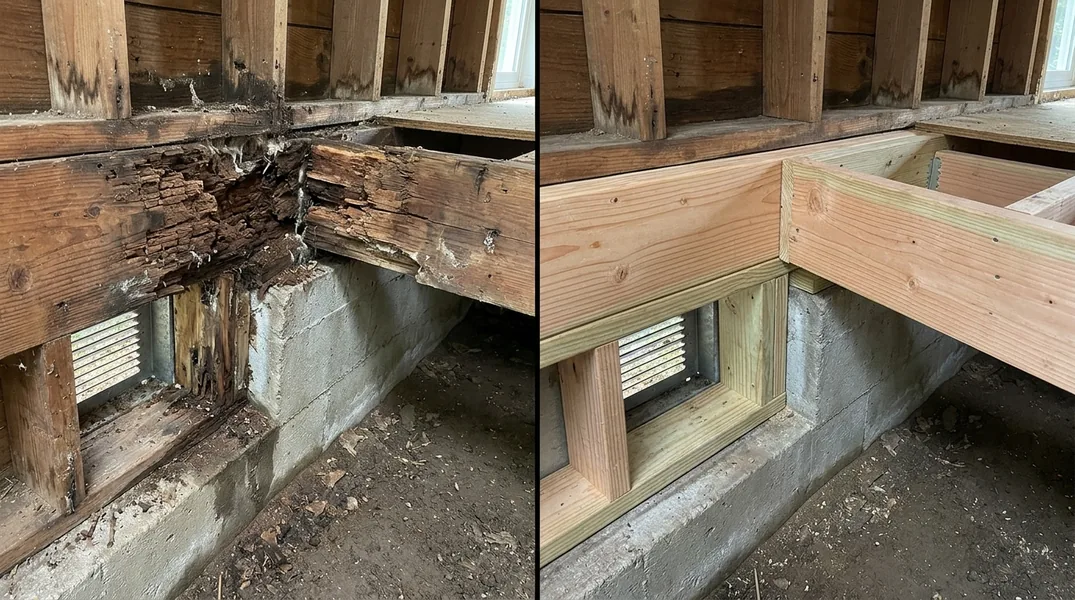
Why Historic Homes in Salem Demand Different Wood Care
If you own a Grant Bungalow or a Court-Chemeketa Victorian in Salem, you're steward of a piece of local architectural history. These homes, built roughly between 1905 and 1920, feature distinctive craftsmanship, original wood siding, deep eaves, and structural details that simply don't exist in modern construction. But that charm comes with responsibility. Historic homes were built with materials and methods that, while durable, require a different maintenance philosophy than newer properties.
The wood in these homes has aged differently than you might expect. After a century or more, the original timber has become denser and more brittle in some cases, while other sections have absorbed moisture and begun to soften. The paint and sealants that protected these surfaces decades ago have long since failed. This creates a perfect storm for wood rot, dry rot, and structural decay. Unlike a 1980s home where you might catch rot in drywall or modern framing, historic homes often hide damage behind plaster, original siding, and layers of paint that mask the true condition of the wood beneath.
Understanding Wood Rot and Dry Rot in Craftsman and Victorian Homes
Wood Rot and Dry Rot Repair is perhaps the most common issue we encounter in Salem's historic homes. The confusion between these two terms matters because they require different treatment approaches. Wet rot occurs when wood remains consistently damp, typically from plumbing leaks, roof failures, or poor drainage around the foundation. Dry rot, despite its name, also requires moisture to develop, but it spreads rapidly through wood and can travel across masonry and even through plaster to reach new timber. Both conditions thrive in the Pacific Northwest's damp climate.
Grant Bungalows often suffer from rot in their characteristic deep eaves and overhangs, particularly where gutters have failed or where the original wood siding meets foundation elements. Victorian homes frequently show damage in their ornamental trim work, bay window frames, and the areas where porches connect to the main structure. The problem isn't always visible from the outside. Rot can work its way through wood from the interior, leaving a sound-looking exterior shell that conceals extensive internal damage. This is why a professional assessment is essential before assuming your historic home's wood structure is sound.
Identifying Early Warning Signs in Your Historic Home
Early detection of wood damage can save you thousands in repair costs and preserve more of your home's original material. Start by examining your wood siding carefully. Look for soft spots where a screwdriver or awl can penetrate easily, paint that's bubbling or peeling in unusual patterns, or wood that feels spongy when you press on it. Pay particular attention to areas where water naturally collects or runs: under windows, along the base of exterior walls, around downspouts, and where different materials meet (wood to brick, wood to concrete, wood to metal flashing).
Inside your home, watch for subtle signs like doors or windows that stick or no longer close properly, floors that feel slightly soft or bouncy in certain spots, or a musty smell in basements, crawl spaces, or lower level rooms. Discoloration of wood, even without obvious soft spots, can indicate moisture accumulation. Many homeowners in historic Craftsman and Victorian properties assume these quirks are simply part of owning an older home, but they're often your house's way of telling you that moisture control has broken down. If you notice any of these signs, reaching out for a free estimate from a professional who understands historic homes is the smart next step.
The Moisture Problem: Salem's Climate and Your Historic Home's Vulnerabilities
Salem sits in the Willamette Valley, where annual rainfall averages over 45 inches and humidity levels remain elevated for much of the year. This climate is beautiful and supports the region's agricultural heritage, but it's relentless on wood. Historic homes built in this environment often lack the moisture barriers that modern construction requires. Original wood siding was typically applied directly to sheathing with no vapor barrier. Roofing systems have deteriorated. Gutters and downspouts may be original or improperly maintained. Crawl spaces often have minimal ventilation. Foundation drainage that was adequate in 1910 is now inadequate given changes in grading and surrounding structures.
The combination of these factors means that moisture doesn't just affect your home's exterior wood siding. It penetrates into the structural system itself. Floor Joist and Subfloor Repair work is frequently needed in Salem's historic homes because moisture wicks up from the soil through the foundation and into the wood frame. Beam rot, which can compromise your home's structural integrity, often starts in places you can't see without removing walls or flooring. This is why preventive maintenance and prompt repair of moisture sources is so critical for homes in our region.
Preventive Maintenance Strategies for Craftsman Bungalows and Victorian Properties
The most cost-effective approach to wood maintenance in historic homes is prevention. Start with your roof and gutters. These are your home's first line of defense against water intrusion. Inspect your roof annually for missing or damaged shingles, and clean gutters at least twice yearly to ensure water flows freely away from your home. If your home has original wood gutters or downspouts, have them professionally maintained or replaced. Proper grading around your foundation is equally important. Soil should slope away from the house, and no soil should contact wood siding directly. This simple step prevents moisture from wicking up into your walls.
Exterior wood siding should be inspected every 2 to 3 years. Look for areas where paint is failing, wood is exposed, or caulking has deteriorated. Maintaining a good paint seal on wood siding is not about aesthetics alone, it's structural protection. If you have original wood windows or doors, keep the sealant and paint in good condition. Ensure that any exterior wood trim, fascia, and soffits are properly sealed. Inside, maintain adequate ventilation in crawl spaces and basements. Consider a dehumidifier in damp areas. Plumbing leaks, even small ones, should be addressed immediately. Many homeowners delay fixing a slow kitchen sink leak only to discover later that the damage has spread into floor joists and substructure. The cost of prevention is always lower than the cost of repair.
When to Call a Professional: Wood Rot and Dry Rot Repair Near Me
There's a point at which homeowner maintenance reaches its limit, and professional intervention becomes necessary. If you've identified soft wood, extensive paint failure, structural movement, or any sign of pest damage like Termite Damage Repair concerns, it's time to contact a specialist. Many homeowners attempt to address wood rot with surface treatments or by simply replacing the visible damaged section. This approach often fails because it doesn't address the underlying moisture source, and hidden decay continues to spread behind the surface.
A professional assessment of your historic home's wood condition involves more than a visual inspection. It includes moisture meter readings, probing of suspect areas, evaluation of the home's drainage and ventilation systems, and an honest assessment of what can be preserved versus what must be replaced. For homes requiring structural work, issues like Beam Replacement and Load-Bearing Wall Removal demand expertise and proper permitting. Salem Carpentry specializes in historic home repair and understands the unique challenges that Craftsman and Victorian properties present. If you're concerned about your home's wood condition, call (971) 273-5364 to discuss your situation with someone who knows these homes inside and out.
Wood Rot and Dry Rot Repair Cost in Salem: What to Budget
Understanding the financial reality of wood repair helps homeowners make informed decisions. The pricing for wood rot repair varies dramatically based on the extent of damage, the location of the affected wood, and whether structural systems are involved. A localized area of rot in exterior trim might cost $500 to $2,000 to repair properly. Damage that extends into structural elements like beams, floor joists, or wall framing can easily exceed $10,000 to $50,000 or more, depending on how much wood must be replaced and whether the home's structural system requires reinforcement during the repair process.
The key to managing costs is early detection and prompt action. Rot that's caught and repaired when it affects only a few board feet of wood is far less expensive than waiting until it has spread through multiple structural members. Many historic homeowners find that budgeting for regular inspections and preventive maintenance actually saves money over time. Rather than facing a catastrophic repair bill, you're addressing issues incrementally as they arise. For an accurate estimate of what your specific situation will cost, Salem Carpentry offers a detailed assessment that identifies all affected areas and provides a clear breakdown of repair options. Contact us at (971) 273-5364 or request a free estimate to understand your options and budget accordingly.
Looking for a professional carpentry contractor in Salem? Salem Carpentry responds fast for all your carpentry needs.
Get a Free QuoteOur services: Wood Rot & Dry Rot Repair · Termite Damage Repair · Floor Joist & Subfloor Repair