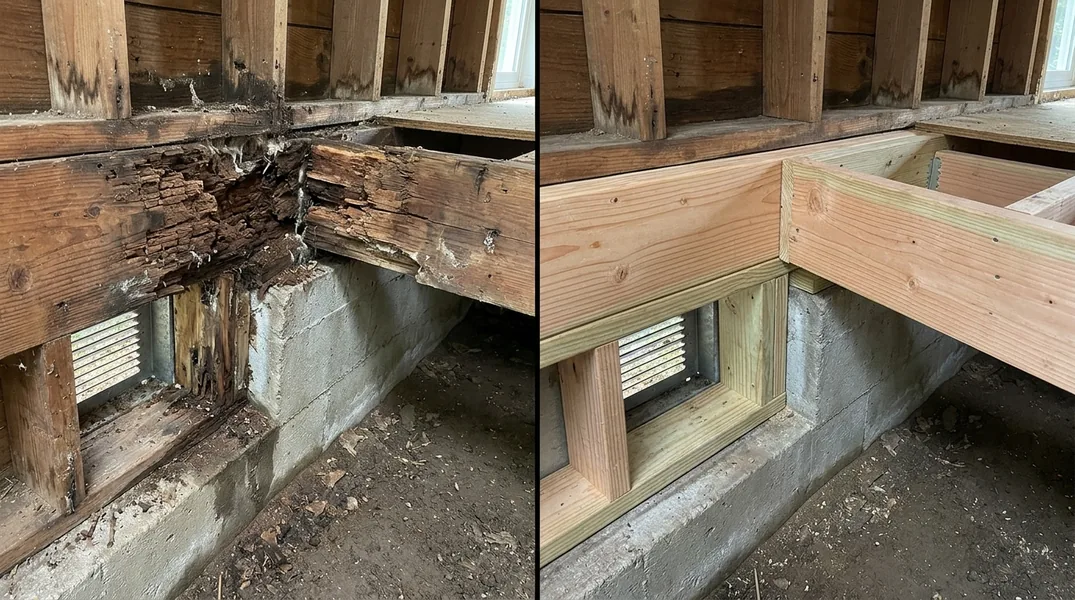
Understanding Wood Rot: The Basics
Wood rot is one of the most common structural problems homeowners face, yet many don't fully understand what's happening beneath the surface. When wood becomes exposed to moisture over time, fungi begin to break down the cellulose and lignin that give wood its strength. This process can happen slowly and silently, making early detection critical.
There are two main types of wood rot: dry rot and wet rot. Dry rot typically occurs in poorly ventilated areas and can spread rapidly through a structure, even to wood that isn't currently wet. Wet rot, by contrast, requires consistently moist conditions and tends to stay localized. Both types compromise your home's structural integrity and can become expensive problems if left unaddressed. If you suspect wood rot in your Salem home, it's important to have a professional assessment rather than guessing about the extent of the damage.
Repair Rotted Wood Without Replacing: Is It Possible?
The short answer is yes, but with important caveats. Wood Rot & Dry Rot Repair can sometimes be accomplished without full replacement, depending on the severity and location of the damage. If rot has only affected the surface or outer layers of wood, and the structural core remains sound, targeted repair is often viable. This might involve removing the affected wood, treating the area to prevent future moisture intrusion, and patching with epoxy filler or new wood.
However, the key question isn't whether repair is theoretically possible, but whether it's the right choice for your specific situation. Structural components like floor joists, beams, or load-bearing walls cannot be safely repaired if they've lost significant strength. A carpenter might be able to repair cosmetic rot on exterior trim or siding, but rot deep within your home's skeleton demands more aggressive action. The best approach is to have a qualified professional evaluate the damage and recommend the most cost-effective and safe solution for your home.
Insect Damaged Wood Repair: Termites, Carpenter Ants, and Beetles
Insect damage presents a different challenge than rot, though the two problems often occur together. Termites, carpenter ants, and wood-boring beetles can hollow out structural wood from the inside, leaving a seemingly solid exterior that's actually compromised. Termite Damage Repair requires not only fixing the visible damage but also addressing the underlying infestation. Simply repairing the wood won't solve the problem if the insects are still active.
When assessing insect damaged wood, professionals look for signs like mud tubes (termites), sawdust piles (carpenter ants and beetles), or hollow-sounding wood when tapped. The extent of repair depends on how much structural material has been consumed. Small, localized damage might be repaired with epoxy and reinforcement, while extensive galleries throughout a beam or joist typically require replacement. In Salem, where moisture levels can encourage pest activity, proactive inspection and swift action are essential to prevent minor damage from becoming catastrophic.
When to Replace Rotted Wood Siding and Trim
Exterior wood siding and trim are among the most visible and vulnerable parts of your home. When rot appears in these areas, replacement is often the most practical solution. Unlike hidden structural components, siding damage is usually caught early because you can see discoloration, soft spots, or peeling paint. The good news is that replacing rotted wood siding is typically more straightforward and less expensive than addressing rot in structural elements.
The decision to replace rotted wood siding depends on several factors: how much of the siding is affected, the age and type of material, and whether the underlying sheathing has been compromised. If rot has penetrated through the siding into the wall structure, the repair scope expands significantly. Modern siding materials like fiber cement or vinyl can be more rot-resistant than traditional wood, making them attractive alternatives. However, if you prefer the aesthetic and performance of wood, proper installation with adequate drainage, flashing, and maintenance can prevent future rot. When you're ready to tackle siding replacement, Salem Carpentry can help assess whether repair or replacement makes the most sense for your home.
Wood Rot & Dry Rot Repair Cost in Salem: What to Budget
Understanding pricing for wood rot repair is essential for homeowners planning their budgets. The cost varies dramatically based on the location and extent of damage. Surface rot on exterior trim might cost $300 to $800 to repair, while structural repairs involving Floor Joist & Subfloor Repair can easily exceed $2,000 to $5,000 or more. The most expensive scenarios involve rot in load-bearing elements, which may require Beam Replacement & Load-Bearing Wall Removal and temporary structural support during work.
Several factors influence the final cost: the amount of wood that needs to be removed and replaced, whether the underlying cause (moisture, poor drainage, ventilation issues) must be corrected, and the complexity of accessing the damaged area. A basement with rot in multiple joists will cost more to repair than a single rotted window frame. It's also important to remember that delaying repairs almost always increases costs. What might be a $1,000 repair today can become a $5,000 problem in a year if moisture continues to penetrate and spread the damage. For an accurate assessment of wood rot repair costs for your specific situation, contact Salem Carpentry at (971) 273-5364 to schedule a free estimate.
Making the Repair vs. Replace Decision: A Homeowner's Guide
So how do you actually decide whether to repair or replace rotted or insect-damaged wood? Start by answering these questions: Is this a structural component or cosmetic element? How extensive is the damage? What's the underlying cause, and can it be fixed? Is the wood still sound beneath the visible damage? A cosmetic issue on exterior trim is a candidate for repair. Structural damage in a floor system or wall is typically a replacement situation. If you can't answer these questions confidently, professional evaluation is your best investment.
Cost is understandably a major factor, but it shouldn't be the only one. Choosing the cheapest repair option might seem smart in the short term, but inadequate repairs can lead to recurring problems and even safety hazards. A qualified carpenter will help you understand the trade-offs and recommend solutions that balance cost, durability, and safety. Whether you're dealing with dry rot in a basement, termite damage in a joist, or rotted siding on your home's exterior, Salem Carpentry has the expertise to guide you toward the right decision. Reach out today at (971) 273-5364 or visit our website to discuss your specific situation and get professional guidance tailored to your home's needs.
Looking for a professional carpentry contractor in Salem? Salem Carpentry responds fast for all your carpentry needs.
Get a Free QuoteOur services: Wood Rot & Dry Rot Repair · Termite Damage Repair · Floor Joist & Subfloor Repair