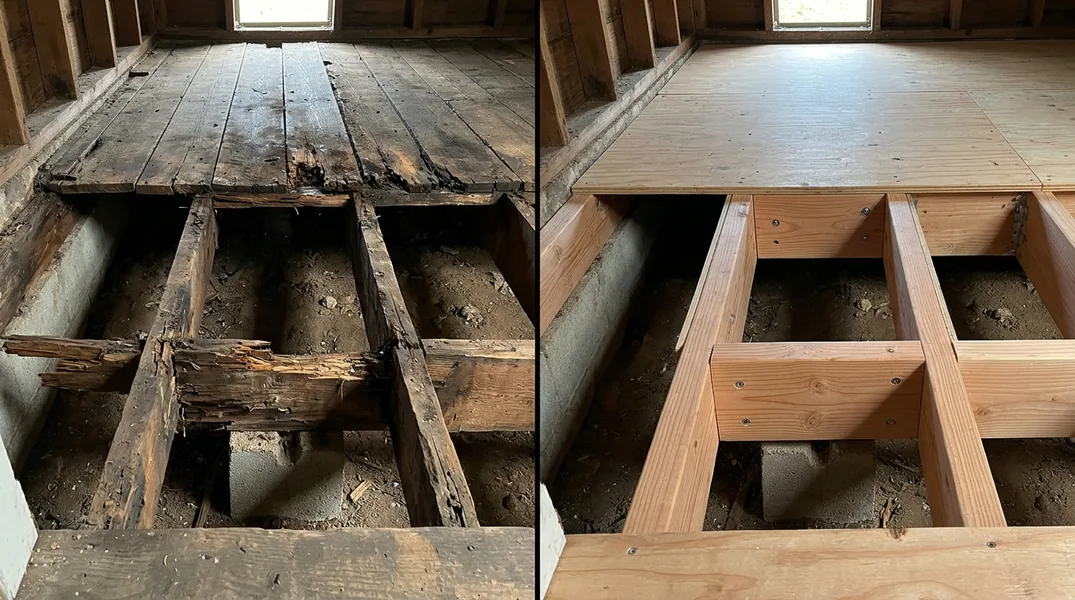
Why Old Salem Homes Develop Sagging Floors
If you own an older home in Salem, you may have noticed your floors aren't quite level anymore. That subtle slope or bounce underfoot isn't just an aesthetic quirk of vintage construction, it's a warning sign that something is wrong beneath your home. Sagging floors typically indicate structural damage to the support system that holds your house up, and in many cases, that damage stems from moisture exposure in the crawlspace.
The most common culprit behind sagging floors in older homes is Wood Rot and Dry Rot Repair affecting the floor joists. These horizontal beams run beneath your floors and carry the weight of everything above them. When exposed to prolonged moisture, wood begins to soften and lose its structural integrity. The problem compounds over time because many homeowners don't realize there's an issue until the damage is already significant. By then, the joists have weakened considerably, and the floor above has begun to sag noticeably.
Crawlspace Moisture: The Root Cause
The crawlspace beneath your home is ground zero for moisture problems. In Salem's climate, with its wet winters and damp springs, crawlspaces are particularly vulnerable to moisture accumulation. Many older homes were built without proper vapor barriers or drainage systems, leaving the exposed soil to release moisture directly into the air above. This moisture rises through the wood, creating the perfect environment for rot to develop.
Poor ventilation in the crawlspace makes the problem worse. Older homes often have limited or blocked vents that don't allow air to circulate effectively, trapping humidity where it can do the most damage. Additionally, grading issues around the foundation or clogged gutters can direct water toward the crawlspace, creating standing water or persistent dampness. Even minor leaks from plumbing or HVAC systems can contribute to the moisture load. The combination of high humidity, poor drainage, and inadequate ventilation creates a perfect storm for wood rot to flourish in your floor joists.
Identifying Floor Joist Damage and Rot
Recognizing the early signs of floor joist deterioration can save you thousands of dollars in repairs. The most obvious warning sign is a noticeable sag or slope in your flooring. You might notice that a doorway is no longer square, or that a marble rolls across the floor in an unexpected direction. Some homeowners describe the feeling of walking on a slightly springy or bouncy floor, which indicates the joists are flexing more than they should. Visible cracks in drywall, particularly above doorways and in corners, often accompany floor sagging as the structural movement stresses the walls above.
Beyond visual signs, you might smell musty odors coming from the crawlspace or notice soft spots when you press on the subfloor. If you have access to your crawlspace, inspect the joists directly. Rotted wood typically appears dark, discolored, and spongy to the touch. You can often press a screwdriver or awl into severely rotted wood with minimal resistance. This hands-on inspection is crucial because the extent of damage isn't always visible from above. If you suspect joist rot, contact Salem Carpentry for a free estimate so a professional can assess the situation and recommend the best repair approach.
Floor Joist Repair Solutions: Sistering and Replacement
Floor Joist and Subfloor Repair comes in several forms, depending on the extent of the damage. The most common repair method for partially damaged joists is called sistering. This technique involves installing a new, pressure-treated board alongside the damaged joist and fastening them together securely. The new joist shares the load with the existing one, restoring strength and stability to that section of the floor. Sistering is an effective solution when the rot is localized and doesn't compromise more than about one-third of the joist's thickness.
For more severely damaged joists, full replacement may be necessary. This involves removing the rotted joist entirely and installing a new one in its place. The process requires temporary support posts to hold up the floor while the work is underway, ensuring the structure remains safe. In some cases, multiple joists in the same area may need repair, which can require more extensive work and temporary bracing. Regardless of which repair method is needed, addressing the underlying moisture problem is equally important. Without fixing the crawlspace conditions that caused the rot, new joists will eventually suffer the same fate as the originals.
Addressing Crawlspace Moisture Before Repairs
Before any floor joist repair work begins, the moisture problem must be tackled. This typically involves improving drainage around the foundation, ensuring gutters and downspouts direct water away from the home, and installing or repairing a vapor barrier in the crawlspace. A proper vapor barrier is usually a heavy plastic sheeting laid over the soil, which dramatically reduces the amount of moisture rising into the wood above. Many older homes lack this barrier entirely, making it a critical upgrade for long-term protection.
Ventilation improvements are also essential. This might include clearing blocked vents, adding additional vents if the crawlspace is too small, or in some cases, installing a mechanical dehumidifier to actively control moisture levels. Some homeowners benefit from a sump pump system if water tends to pool in the crawlspace. The goal is to create an environment where moisture levels stay low enough that wood rot cannot develop. When you combine proper moisture control with quality joist repairs, you're investing in the long-term structural health of your home. Professional contractors understand these interconnected systems and can design a comprehensive solution rather than just treating symptoms.
Floor Joist Repair Cost in Salem: What to Budget
The pricing for sagging floor repair varies widely depending on how many joists need attention, how severe the damage is, and what moisture remediation work is required. A single sistered joist might cost between $500 and $1,500, while full joist replacement typically ranges from $1,500 to $3,500 per joist. If multiple joists need work, costs add up quickly. Additionally, if the subfloor above the joists has rotted, that repair must be factored in separately. Crawlspace moisture control measures like vapor barrier installation or improved drainage can add another $1,000 to $5,000 depending on the size of the crawlspace and the complexity of the work.
While these numbers might seem substantial, consider the alternative. Ignoring floor sagging and joist rot leads to increasingly severe structural problems, potential foundation issues, and eventually catastrophic failure that could make your home unsafe or uninsurable. Catching the problem early and addressing it comprehensively is far more cost-effective than waiting for conditions to worsen. For an accurate assessment of what your specific situation will cost, call Salem Carpentry at (971) 273-5364 or request a free estimate today. A professional inspection will give you a clear picture of the scope of work needed and help you plan your budget accordingly.
Why Professional Help Matters for Structural Repairs
Floor joist and structural repairs are not typical DIY projects. The work involves temporary support systems, precise measurements, building code compliance, and often requires permits. Mistakes in this area can compromise your home's structural integrity and create safety hazards. Professional contractors like Salem Carpentry have the experience to assess damage accurately, design solutions that address both the immediate problem and underlying causes, and execute repairs that will last for decades.
Additionally, insurance and future home sales may depend on having repairs done by licensed professionals with proper documentation. Lenders and inspectors want to see that structural work was completed to code by qualified contractors. When you invest in professional Floor Joist and Subfloor Repair, you're protecting not just your home's structure, but also its value and your family's safety. If you're noticing signs of floor sagging in your Salem home, don't wait. Contact Salem Carpentry at (971) 273-5364 to schedule a professional evaluation and start the path toward a level, stable floor.
Looking for a professional carpentry contractor in Salem? Salem Carpentry responds fast for all your carpentry needs.
Get a Free QuoteOur services: Wood Rot & Dry Rot Repair · Termite Damage Repair · Floor Joist & Subfloor Repair